The Franky Fit Guide
Your complete handbook for measuring, sizing, and shaping the perfect hat.
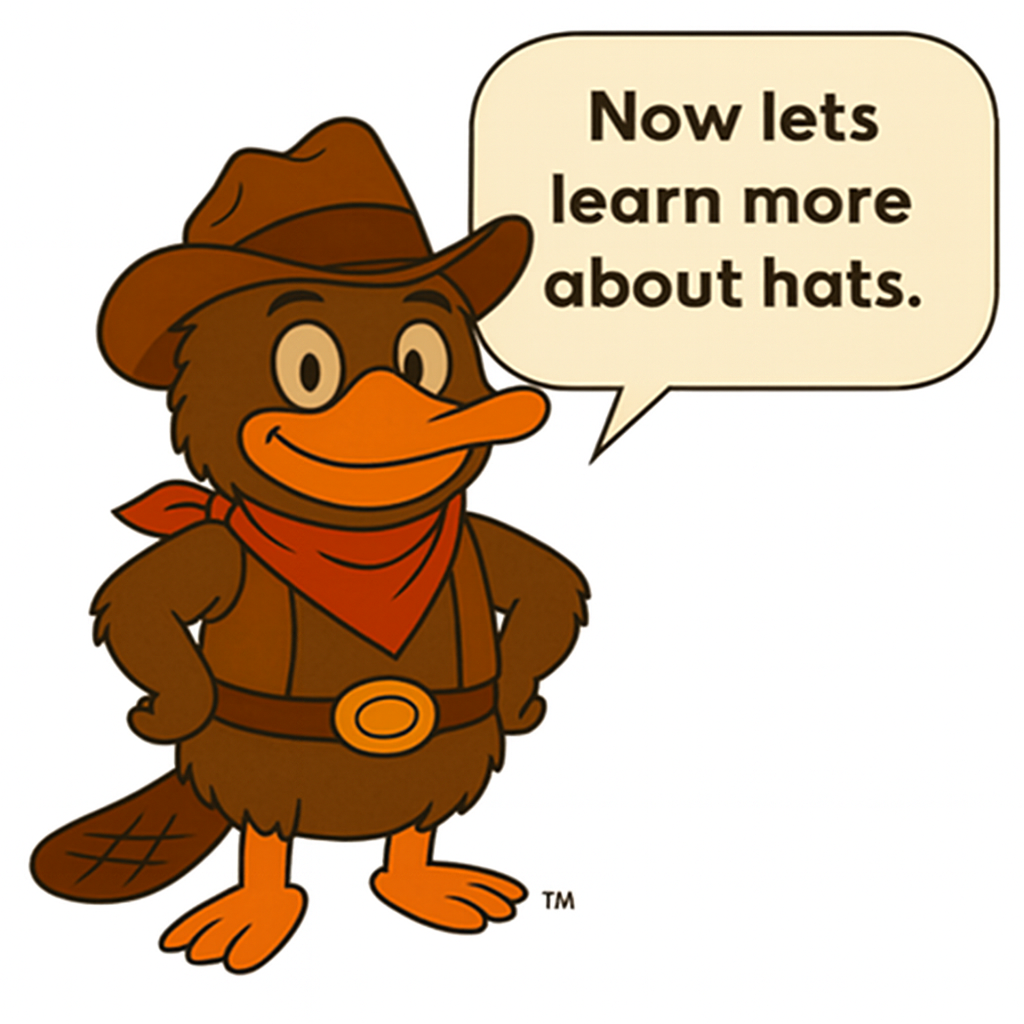
Howdy — I’m Franky
Welcome. I’m your guide to understanding how a well-made hat should fit and what the different quality levels mean. Whether you’re choosing your first hat or refining your collection, this guide will help you make an informed choice.
I’m not your average mascot, either — part mammal, part bird, part reptile, and a natural-born multitasker. With my cowboy hat and hybrid nature, I stand for everything Reformed Brims believes in: faith, craftsmanship, versatility, and the courage to do things differently. I don’t just wear a cowboy hat — I wear many hats, just like you.
Why Fit Matters
A well-fitted hat isn’t just about looks — it’s about comfort, longevity, and preserving the shape of your investment. A proper fit keeps your hat secure without pressure points, holds its form over time, and reflects the craftsmanship that went into making it. Remember: sizing can vary slightly between manufacturers, so measuring is always worth the time.
How to Measure Your Head
- Choose your tool. Use a soft measuring tape or a piece of string about 25 inches long.
- Find the right spot. Wrap it around your head ½ to ¾ inch above your ears and just above your eyebrows.
- Adjust for comfort. Hold the tape snugly but not tight.
- Record it. Note the number on the tape or take a picture.
- Mark and measure. If using string, mark where the ends meet, then lay it flat and measure with a ruler.
- Know your shape. Head shapes vary — oval, round, square.
- Consider hair changes. Hair density affects fit.
- Mind manufacturer variations. Sizing can vary between brands.
Understanding Head Shapes
Extra Long Oval
Longer front-to-back than side-to-side. Often needs custom shaping.
Long Oval
Slightly elongated front-to-back. Common, and fits most oval hats.
Oval
Balanced shape. Fits standard hat blocks well.
Round
Equal front-to-back and side-to-side. May feel tight in standard ovals.
U.S. Hat Size Conversion
All measurements are approximations — for the best fit we measure and fit every hat by hand.
| Size | Hat Size Range | Head Circumference | Head Shape |
|---|---|---|---|
| Small | 6½ – 6¾ | 20½" – 21¼" | Extra Long Oval |
| Medium | 6⅞ – 7⅛ | 21⅝" – 22½" | Long Oval |
| Large | 7¼ – 7⅜ | 22⅞" – 23¼" | Oval |
| X-Large | 7¾ – 8 | 24½" – 24¾" | Oval |
| XX-Large | 7 – 7⅜ | 24¾" – 25" | Round |
Between sizes? Size up — we fit it down precisely by hand.
Your Crown, Your Character
The crown and brim are where a hat gets its personality. Every one is shaped by hand to your request — here are the classic shapes to choose from.

Every crown and brim is shaped by hand to your request. Additional shapes and details available on special request.
The X-Factor
The “X” stamped inside a hat is a language of quality, history, and status — but for most people, it’s a language they don’t speak. Here’s what it really means.
Then
The X rating began as a way to denote felt quality — tied directly to the percentage of beaver fur in the felt. A 10X hat might once have been roughly 100% beaver. Back then, the rating was a fairly consistent indicator of material quality across makers.
Now
Today the X rating is more marketing tool than standard. There’s no industry-wide regulation, and each brand sets its own criteria — so a 100X from one maker can equal a 1000X from another. Feel the hat, know the brand’s standards, and consider your lifestyle.
Materials in Western Hats
- Wool Felt — affordable and widely available; less durable and water-resistant than fur felt. Common in entry-level hats.
- Fur Felt — made from animal fur (usually rabbit or beaver); softer, more durable, and more water-resistant than wool.
- Rabbit Fur — often used in mid-range hats.
- Beaver Fur — the premium material used in high-end hats.
- Straw — for warm-weather hats; quality is judged by weave tightness rather than X rating.
A 7X might be perfect for daily ranch work, while a 60X or higher suits formal occasions and collectors. Let the experts at Reformed Brims® help you make the right choice.
Care & Maintenance
- Store your hat on a flat surface or hat stand to maintain its shape.
- Avoid leaving it in hot cars or direct sunlight for long periods.
- For light dust, use a soft brush on a felt hat — brush gently.
- For a deep cleaning and a reshape, contact Reformed Brims®.
- Rotate wear to extend its life and let the hat breathe.
About Reformed Brims®
At Reformed Brims®, we believe a hat is more than an accessory — it’s a statement of craftsmanship, heritage, and personal style. Every hat we create is shaped by hand, built with premium materials, and designed to last a lifetime. We honor the traditions of classic hat-making while embracing the individuality of every wearer. From the first steam to the final stitch, your hat is a reflection of our passion for the craft.
“Thanks for letting me guide you this far — you sure have learned a lot. I can’t wait to see you wearing your new hat from Reformed Brims®.”